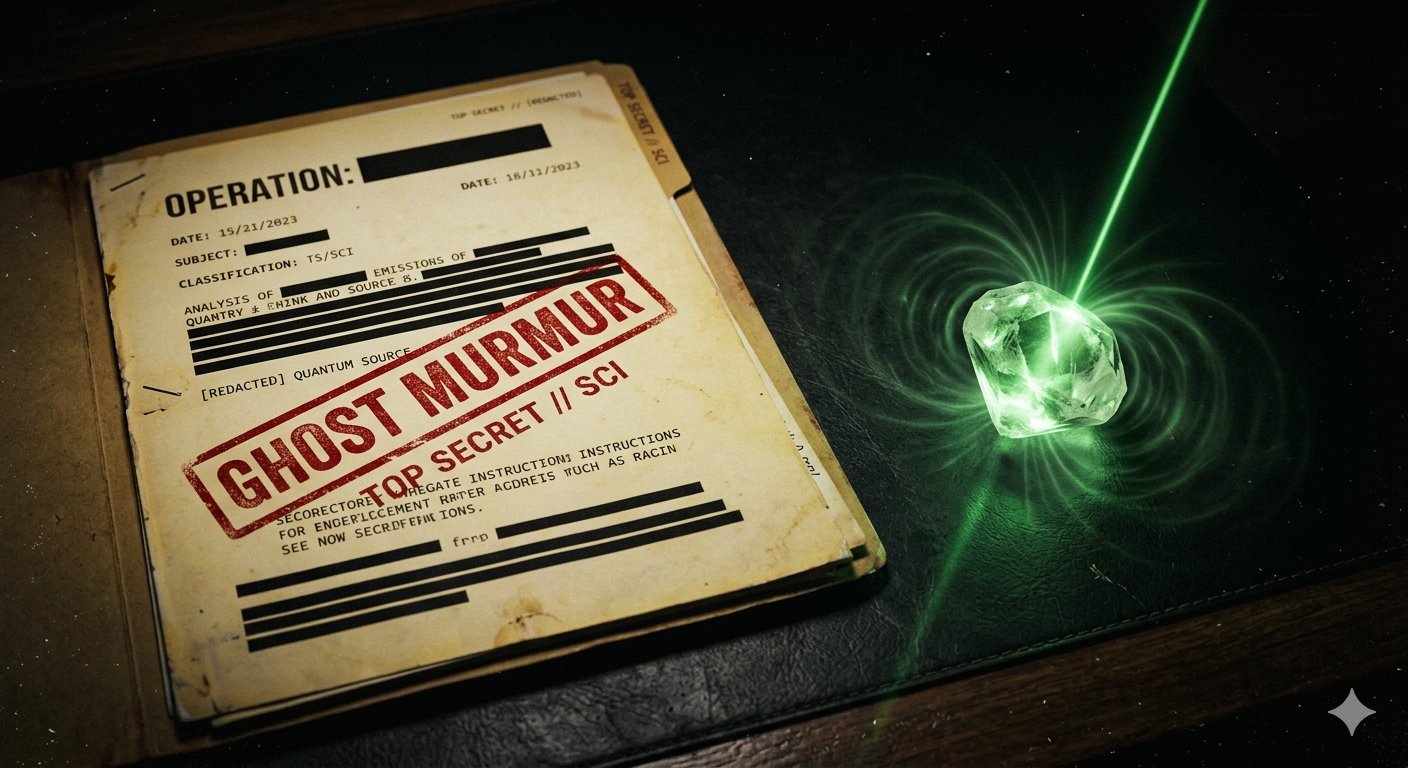
The CIA says it detected a downed pilot's heartbeat from 40 miles away using quantum sensors. The physics says that's impossible — by 15 orders of magnitude. The story behind the story is more interesting than either claim.
On April 3, 2026, an F-15E Strike Eagle — callsign "Dude 44" — was shot down by a shoulder-fired missile over southwestern Iran during Operation Epic Fury. The pilot ("Dude 44 Alpha") was recovered within hours. The weapons systems officer ("Dude 44 Bravo") evaded Iranian forces for approximately 48 hours, hiding in a crevice in the Zagros Mountains before a massive overnight rescue involving 155 aircraft and hundreds of special operations personnel brought him home. This part is verified. CENTCOM statements, White House press conferences, Air & Space Forces Magazine, Military Times, and Aviation Week all confirm the broad outlines.
Then the story got weird.
On April 6, CIA Director John Ratcliffe stood next to President Trump and referenced "exquisite technologies" and capability "no other intelligence service possesses." Trump claimed the CIA spotted the airman from "40 miles away." Neither named the technology. The next day, the New York Post published an exclusive citing two anonymous sources "close to the breakthrough": the CIA had used a classified program called Ghost Murmur — a Lockheed Martin Skunk Works system using nitrogen-vacancy diamond sensors and AI — to detect the pilot's heartbeat from 40 miles and pinpoint his location.
The story spread virally because it has everything: special operations drama, classified spy tech, the CIA, and a physically impossible capability presented as an American miracle. The problem is the physics. And the physics makes this impossible by a margin so large the number barely fits in a sentence.
This story fits a documented pattern from this administration. In January 2026, Trump attributed the capture of Nicolás Maduro to a secret weapon called "The Discombobulator" — also via anonymous sources, also in the New York Post, also with cinema-ready technical flourishes. CNN reported a senior official said Trump was "likely conflating tools." Both claims share the same information architecture: White House tease, NY Post exclusive, anonymous sourcing, scientifically impressive terminology, zero verification. The playbook is identical.
The most probable explanation: the CIA is protecting real intelligence methods. The airman was almost certainly located through a combination of his CSEL (Combat Survivor Evader Locator) survival beacon, SIGINT intercepts of IRGC communications, satellite or drone thermal imaging, or human intelligence assets. By attributing the find to an impossible quantum technology, you simultaneously protect those sources and project capability that puts adversaries on their back foot.
That's smart tradecraft. It's also worth investigating, because a lot of people now believe America has technology that doesn't exist — while the technology that does exist gets almost no attention.
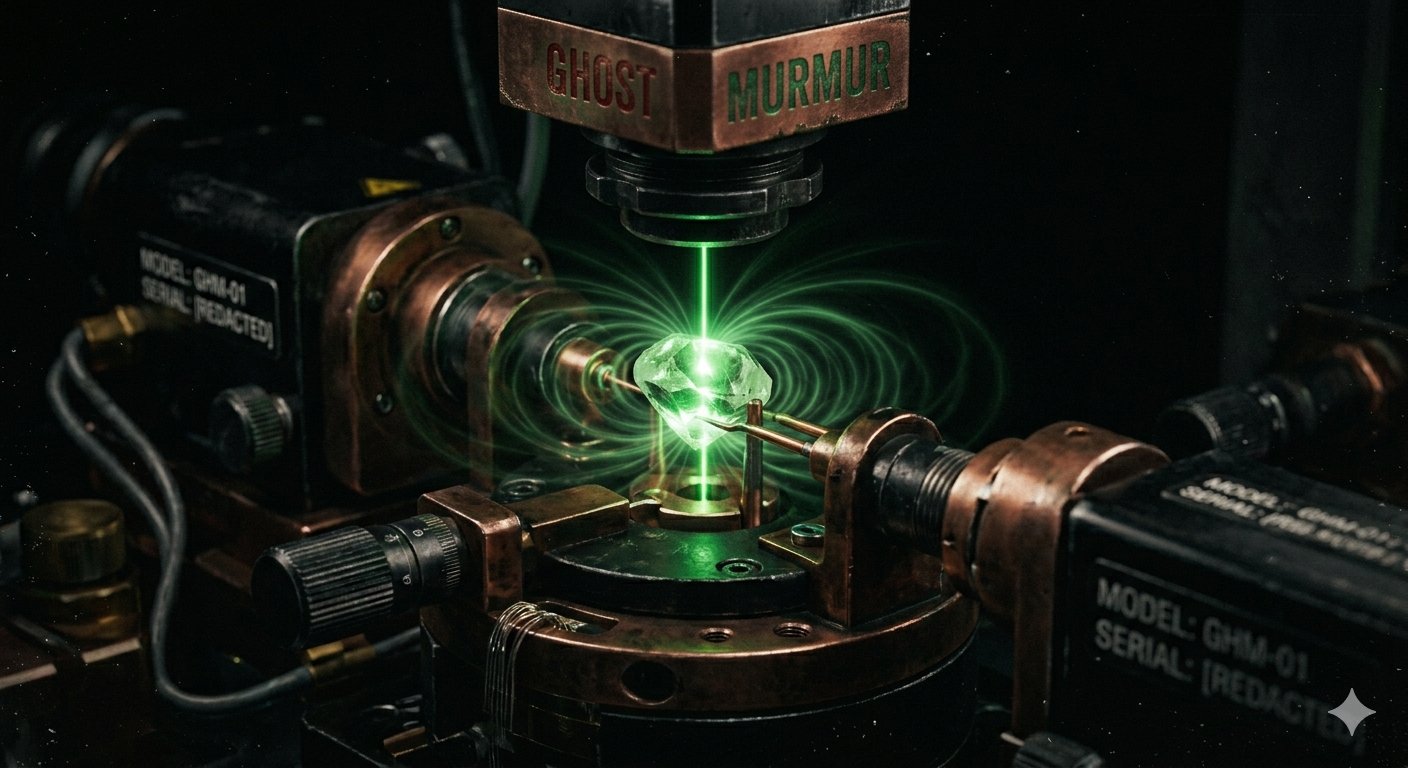
Quantum magnetometry uses quantum-mechanical properties of matter to measure magnetic fields with extraordinary precision — far beyond what conventional instruments can achieve. Three technologies dominate the field.
An NV center is a defect in a diamond crystal lattice: a nitrogen atom sitting next to an empty space where a carbon atom should be. This defect has a spin state that shifts measurably in the presence of a magnetic field. A green laser initializes the spin, microwave pulses manipulate it, and red fluorescence reads it out. The beauty of NV centers is room-temperature operation and nanoscale spatial resolution — you don't need liquid helium to run one. The limitation is sensitivity. Best lab demonstrations reach roughly 670 femtotesla per √Hz. Typical practical systems run 1–100 picotelsa per √Hz — about 1,000 times worse.
Lockheed Martin's actual documented NV diamond work is a 2019 program called Dark Ice — designed for GPS-denied navigation by measuring Earth's magnetic field anomalies. Not heartbeats. Earth's field. The Dark Ice team lead left Lockheed in 2020 and the trademark application was abandoned.
A superconducting loop interrupted by Josephson junctions produces voltage oscillations tied to magnetic flux with a periodicity of one flux quantum (Φ₀ ≈ 2.07 × 10⁻¹⁵ Wb). The sensitivity is extraordinary: noise floors reach 1–3 femtotesla per √Hz, with the best demonstrated measurement reaching 5 attotesla over days of averaging. These are the sensors used in magnetoencephalography (MEG) to map brain activity.
The catch: SQUIDs require cooling to 4.2 Kelvin with liquid helium. They're bulky, expensive, and extremely difficult to field-deploy. A vibration from a passing truck degrades performance. The cryogenic dewar constrains everything. A full MEG system costs over $3 million and requires a dedicated magnetically shielded room. Bringing this into the field is a solved problem exactly nowhere.
These use dense alkali-metal vapor — potassium, rubidium, or cesium — where spin-exchange collisions between atoms occur so rapidly they average out, extending coherence and boosting sensitivity. Operating in the SERF (Spin-Exchange Relaxation-Free) regime, the Romalis group at Princeton set the sensitivity record in 2010: 0.16 femtotesla per √Hz. The theoretical limit approaches 0.01 fT/√Hz. No cryogenics. Can be miniaturized.
But SERF magnetometers have a crippling operational constraint: they require ambient magnetic fields below approximately 5 nanotesla. Earth's field is 25,000–65,000 nanotesla. SERF sensors cannot function in Earth's field without heavy shielding or active cancellation. Step outside a mu-metal enclosure and performance degrades by orders of magnitude.
| Technology | Best Sensitivity | Operating Temp | Field Deployment | Heartbeat Range |
|---|---|---|---|---|
| NV Diamond | ~670 fT/√Hz | Room temp | Improving — TRL 5-6 | <1m (shielded) |
| SQUID | 1–3 fT/√Hz | 4.2 Kelvin | Not field-ready | ~1-2m (shielded room) |
| OPM (SERF) | 0.16 fT/√Hz | Room temp | Requires shielding | <50cm (shielded) |
| OPM (unshielded) | ~140 fT/√Hz | Room temp | Limited | <5cm, maybe |
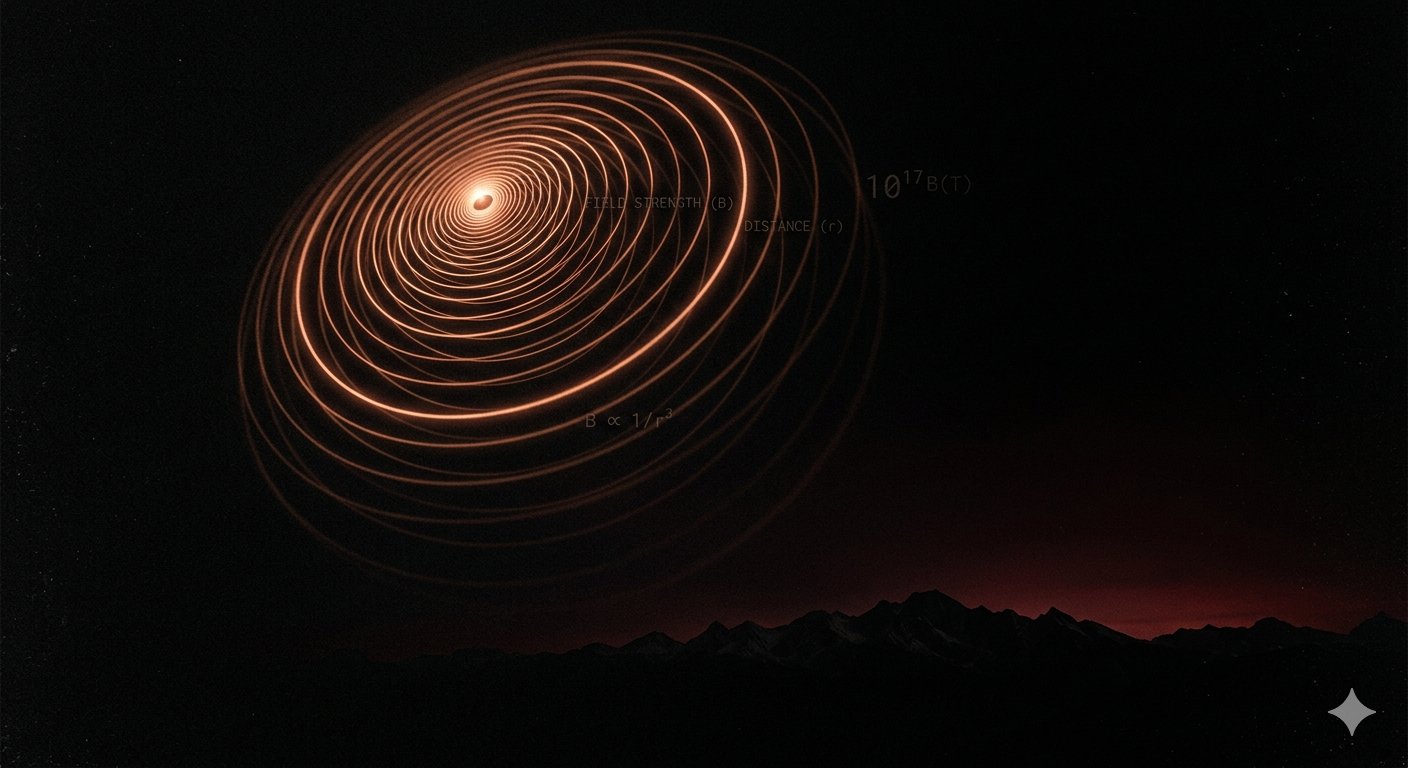
The magnetic field of the human heart measures approximately 50–100 picotesla at the chest surface, roughly 10 centimeters from the cardiac source. This field comes from ionic currents in the myocardium. It behaves as a magnetic dipole, which means it decays not as the inverse square of distance — like light — but as the inverse cube. The reason: magnetic monopoles don't exist. Doubling the distance cuts the signal by a factor of eight. An eightfold improvement in sensor sensitivity only doubles detection range.
At 64 kilometers (approximately 40 miles), the calculation is unforgiving. The distance ratio from 10 centimeters to 64 kilometers is 640,000. Cubing that gives an attenuation factor of 2.62 × 10¹⁷. The heart's field at 40 miles works out to roughly 2 × 10⁻²⁸ tesla — a number so small it lacks any practical unit in magnetometry.
For context: this is 0.0002 attotesla, or about 800,000 times below the noise floor of the world's most sensitive magnetometer ever built (the Princeton SERF), and roughly 50,000 times below even the theoretical quantum limit of that technology. Against real-world environmental noise in an Iranian mountain range — geomagnetic fluctuations of 1–10 picotesla per √Hz in the heartbeat frequency band — the signal-to-noise ratio at 40 miles is approximately 10⁻¹⁷.
AI signal processing, frequently cited as the technological bridge, cannot overcome this deficit. Machine learning can extract patterns from data, optimize sensor control, and cancel platform noise. Q-CTRL has demonstrated 111× positioning accuracy improvement over classical inertial navigation using AI. These are real gains. But AI cannot create information from thermodynamic nothing. When the signal is 10¹⁷ times below the noise floor, no algorithm recovers it. This is not a software problem. It's the second law of thermodynamics.
Five independent physicists contacted by Scientific American and Science/AAAS within 24 hours of the story breaking all reached the same conclusion. Dmitry Budker (University of Mainz), whose own lab published a 2026 preprint on NV-diamond cardiac measurements, called himself "extremely skeptical" — noting his team needed 5 minutes of averaging thousands of heartbeats with the sensor pressed against a patient's chest in a shielded room. Ronald Wakai (University of Wisconsin) called it "really implausible." John Wikswo (Vanderbilt), who performed the first measurement of an isolated nerve's magnetic field, noted that at one meter from the heart the signal drops to a thousandth. Bradley Roth (Oakland University, author of Biomagnetism: The First Sixty Years): "In 60 years of cardiac magnetometry, detection is usually done in a lab with shielding, just a few centimeters from the heart, and even then you can barely record it."
As physicist Chad Orzel of Union College put it: the claim sounds like "somebody yanking a reporter's chain."
Strip away the Ghost Murmur spectacle and a genuinely consequential military technology program emerges. DARPA is running at least six quantum sensing programs, all publicly documented.
RoQS (Robust Quantum Sensors), launched in Phase 1 in August 2025, awarded $24.4 million to Q-CTRL — with Lockheed Martin as a subcontractor — to develop quantum sensors that survive real-world conditions on military platforms. The stated Phase 1 goal: keep a quantum sensor functioning aboard a helicopter without it being destroyed by vibration, temperature swings, and electromagnetic interference. That's where the publicly known frontier actually is. Not 40-mile heartbeat detection. Surviving a helicopter.
SAVaNT develops room-temperature atomic vapor sensors for vector magnetometry and RF detection. QuIVER pursues arrayed tensor magnetometers that can precisely locate a magnetic object with a single measurement — explicitly targeting magnetic anomaly detection for explosives, mines, and subsurface structures. AMBIIENT pushes toward field-deployable magnetometers for brain-machine interfaces and concussion diagnostics.
The Defense Innovation Unit's Transition of Quantum Sensing (TQS) program awarded contracts to 18 performers including Lockheed Martin, Northrop Grumman, Anduril, Honeywell, SandboxAQ, Q-CTRL, QuSpin, and AOSense across five applications: inertial sensors, gravimeters, magnetic anomaly detection, magnetic navigation, and component development. Phase 1 involves over 10 field demonstrations across ground, air, and maritime domains.
Q-CTRL's Ironstone Opal achieved 111× greater positioning accuracy than high-end inertial navigation systems during GPS-denied flight trials and completed 144 hours of continuous operation aboard a Royal Australian Navy vessel. The technology works. The application is navigation, not biometric surveillance from orbit.
The honest military picture for quantum magnetometry is incremental improvement in magnetic anomaly detection (MAD) — a technology that has existed since World War II — combined with genuinely transformative progress in GPS-denied navigation.
Classical MAD using the CAE MAD-XR on MH-60R Seahawk helicopters achieves slant detection ranges of roughly 450–800 meters at 200-meter altitude for submarines. A Chinese SQUID array developed at the Shanghai Institute of Microsystem and Information Technology claims an estimated 6-kilometer detection range. An MIT thesis from 2025 modeled quantum MAD extensively and concluded that environmental noise at 1–3 kilometer range overwhelms submarine signals even with quantum sensors.
No quantum magnetometer is confirmed as operationally deployed by any military as of April 2026. The most advanced systems sit at Technology Readiness Level 6–7 for navigation and TRL 4–5 for magnetic anomaly detection. The gap between TRL 5 and an operational weapons system is typically 5–10 years and billions of dollars.
The confirmed documented military applications of quantum sensing include:
GPS-denied navigation — mature and advancing (SandboxAQ AQNav, Q-CTRL Ironstone Opal). Inertial navigation improvement — quantum accelerometers and gravimeters achieving unprecedented drift rates. IED and mine detection — DARPA QuIVER targets detection of buried metallic objects. Submarine detection (MAD enhancement) — improving existing capability incrementally, not revolutionizing it. Medical imaging — OPM-based MEG systems reducing the need for shielded rooms and making cardiac and brain imaging portable.
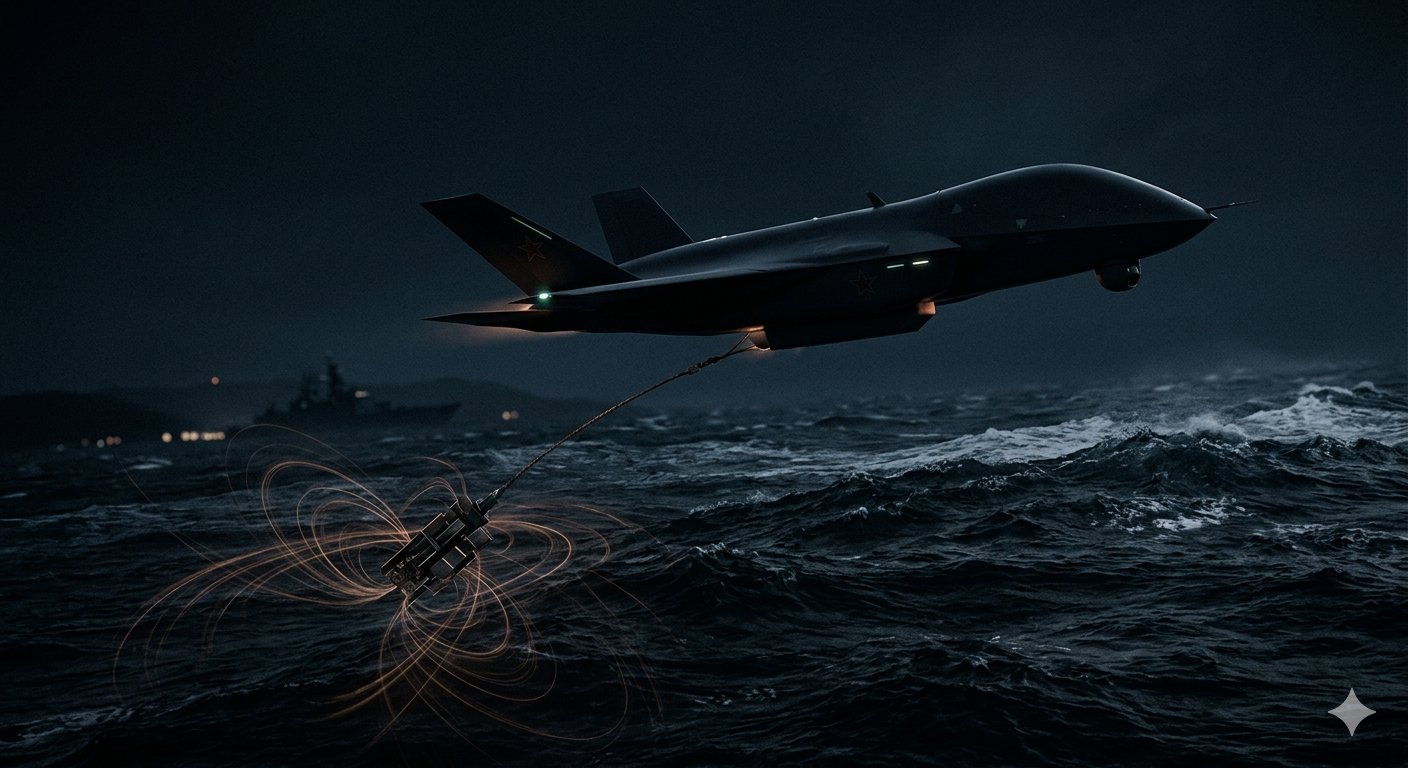
The geopolitical stakes of quantum sensing extend well beyond any single cover story. China's investment program is documented, substantial, and accelerating — and the U.S. response is fragmented.
China's 14th Five-Year Plan explicitly targeted "breakthroughs in quantum precision measurement technology." The Metrology Development Plan (2021–2035) calls for "a national modern advanced measurement system with quantum metrology at its core." Thirteen national-level policy measures support quantum precision measurement. The CSIS estimates China's total quantum investment could reach $15–25 billion across the Five-Year Plan period.
The military demonstrations are concrete and documented. In April 2025, China's CASC Quantum Engineering Research Centre successfully tested a drone-mounted CPT atomic magnetometer in sea trials off Weihai, achieving 0.849 nanotesla accuracy — roughly matching NATO's MAD-XR performance at lower cost and with omnidirectional coverage. This was published in the Chinese Journal of Scientific Instrument and represents the first publicly documented drone-based quantum MAD sea trial by any nation.
In April 2026, the Chinese Academy of Sciences demonstrated a compact SQUID-based gravity sensor in uncontrolled outdoor conditions — aimed at detecting submarines by the gravitational disturbance of their mass rather than their magnetic signature. The PLA's National University of Defence Technology reportedly has more than 10 quantum warfare tools under development, according to PLA Science & Technology Daily.
The Australian Strategic Policy Institute found China's research impact is world-leading in 7 of 10 sensing technology areas, though the U.S. leads specifically in atomic clocks, gravitational force sensors, and quantum sensors.
CSIS issued a blunt warning in October 2025: the United States faces "fragmented investments and no coherent vision" in quantum sensing. Their five essential reforms to stay competitive included consolidating program management under a single DoD office, establishing clear transition pathways from DARPA to operational programs, and accelerating the security clearance process for academic quantum researchers — currently taking 18+ months and effectively shutting out the universities doing the best work.
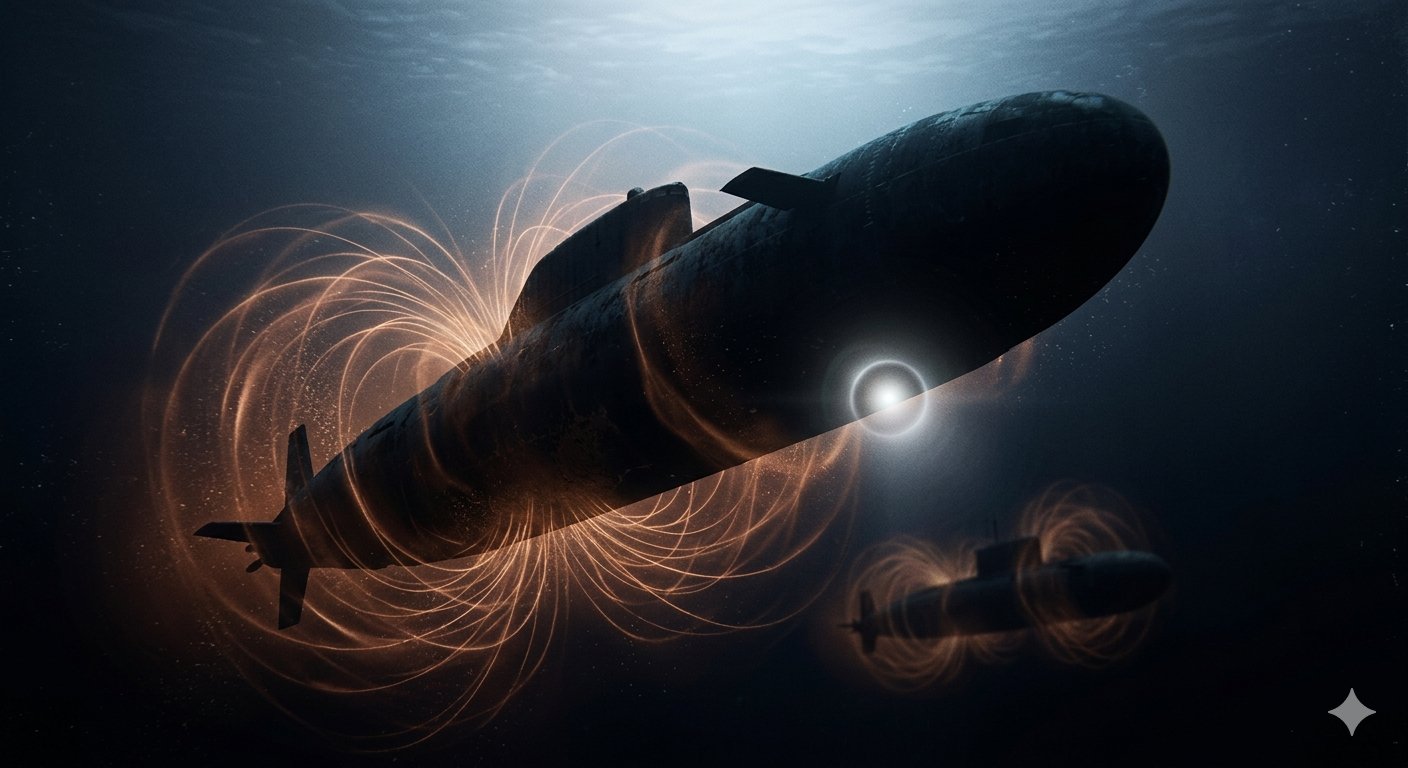
The most consequential near-term implication of quantum magnetometry is its potential to erode the stealth of nuclear ballistic missile submarines (SSBNs) — the backbone of nuclear deterrence. The United States fields 14 Ohio-class SSBNs carrying roughly half its nuclear stockpile. The incoming Columbia-class will serve until the 2070s. Their deterrent value depends entirely on the adversary's inability to track them.
Nuclear deterrence theory is built on second-strike capability: the ability to absorb a first strike and still retaliate with devastating force. If an adversary believes it can track and destroy SSBNs before launch, the entire deterrent calculus changes. The stability of nuclear deterrence depends on submarine invulnerability. Quantum magnetometry is one of several technologies that could, over a long enough timeline, degrade that invulnerability.
Current classical MAD achieves reliable detection at 450–800 meters slant range. Quantum enhancement to 5–10 kilometers — plausible though not certain over the next decade — would meaningfully change anti-submarine warfare even without a miraculous breakthrough. China's layered approach — drone-mounted quantum magnetometers, quantum gravimeters, AI-driven sensor fusion, and persistent undersea sensor networks — represents exactly the architecture designed to narrow this gap systematically.
None of this is apocalyptic on a near-term timeline. But it's happening. And the public conversation is entirely consumed by whether a CIA spy gadget detected a heartbeat from 40 miles, which it didn't, while the actual strategic competition proceeds under that cover of noise.
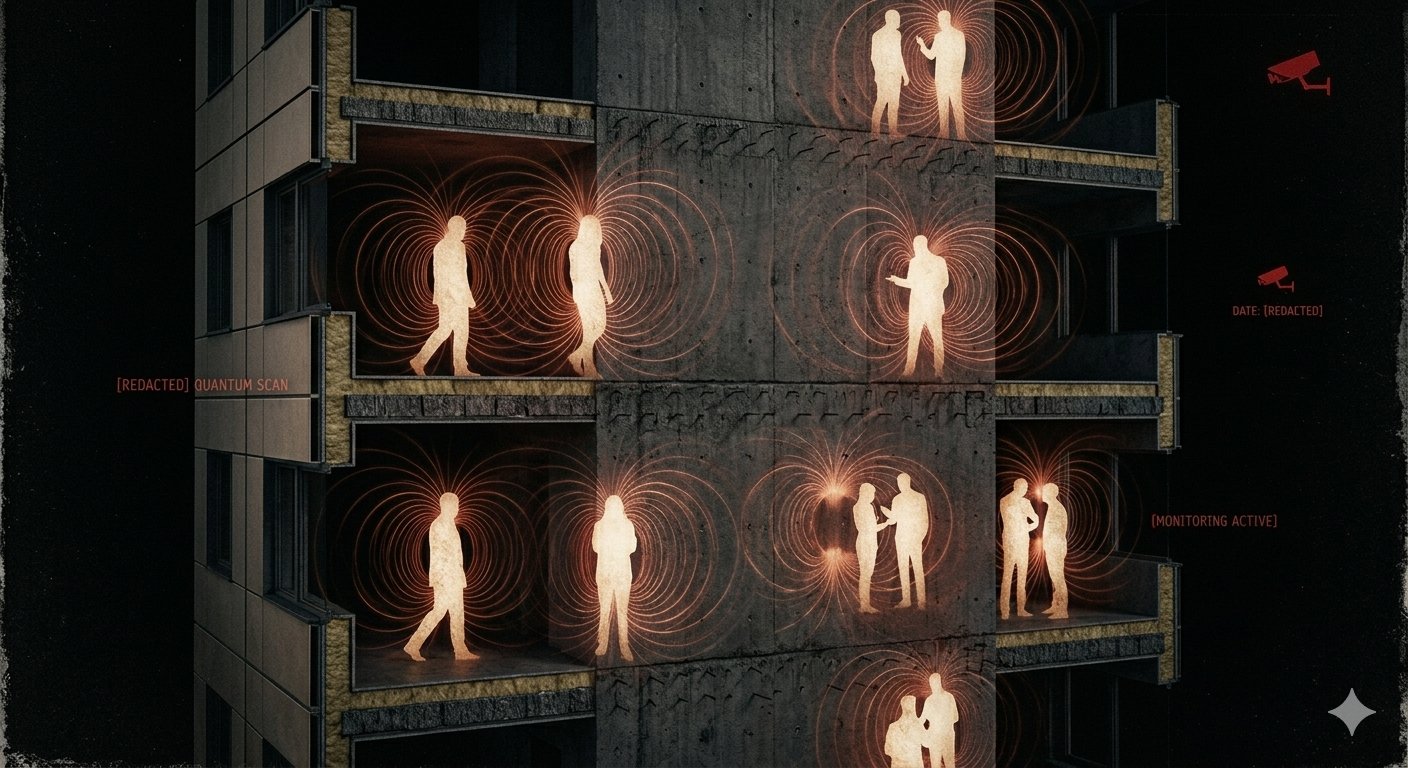
A Harvard Berkman Klein Center analysis published in February 2026 made an observation that deserves far more attention than it received: quantum sensors "bypass the physical boundaries — walls, distance, the opacity of the human body — on which existing privacy doctrine depends."
Current U.S. privacy law is built around physical analogies. The Fourth Amendment protects against unreasonable searches. Courts have held that thermal imaging of a home constitutes a search requiring a warrant (Kyllo v. United States, 2001). The doctrine of "reasonable expectation of privacy" assumes that walls provide meaningful concealment. Quantum sensing technology, as it advances, pushes well beyond thermal imaging in specificity and penetration.
What becomes possible at various levels of quantum sensing maturity:
Near-term (already possible in lab conditions, 2–5 years to field-portable): Detecting human presence through non-ferrous walls using magnetic field disturbances. Identifying metal objects carried by individuals. Mapping underground structures by gravity and magnetic anomaly.
Medium-term (5–10 years with sustained progress): Detecting heartbeats at ranges up to a few meters through walls without shielding. Identifying individuals by their unique magnetic cardiac signature in controlled conditions. Workplace biometric monitoring without physical contact.
Long-term (10+ years, contingent on breakthroughs): Persistent surveillance of populations using magnetic signatures. Involuntary health condition detection (cardiac arrhythmias, neurological conditions) from a distance. Building-scale occupancy and behavioral mapping.
The Ghost Murmur story, whatever its origins, has had the effect of making quantum sensing seem like an exotic military curiosity rather than a near-term civil liberties issue. That framing serves certain interests.
The real money in quantum sensing reflects the real applications — navigation, positioning, medical imaging, and defense — not science fiction heartbeat detection.
SandboxAQ (spun out of Alphabet in 2022) raised a $450+ million Series E in April 2025, reaching a $5.75 billion valuation with total funding exceeding $950 million. Investors include Google, NVIDIA, T. Rowe Price, and Ray Dalio's Bridgewater. Their AQNav magnetic navigation system is in active USAF flight testing. This is not a speculative quantum computing play — it's a company with deployed technology and defense contracts.
Infleqtion (formerly ColdQuanta) went public via SPAC at a $1.8 billion pre-money valuation, reporting $29 million in trailing revenue and a $300 million pipeline. They closed a $100 million Series C, partnered with SAIC for defense deployment, and have a DARPA award for quantum navigation.
Global quantum technology VC funding hit $2.6 billion in 2024, a 138% increase over 2023. Government investment is larger: the U.S. National Quantum Initiative has committed over $1.8 billion through 2025. Japan announced $7.4 billion over 10 years in 2025. The UK committed £2.5 billion through 2033. The EU Quantum Flagship is a €1 billion program.
| Country / Bloc | Committed Investment | Timeline | Sensing Focus |
|---|---|---|---|
| China | $15–25B (est.) | 2021–2025 plan | MAD, gravimetry, navigation |
| United States | $1.8B+ (NQI) | 2019–2025 | Navigation, sensing, computing |
| Japan | $7.4B | 2025–2035 | Broad quantum technology |
| European Union | €1B (Flagship) | 2018–2028 | Sensing, communications |
| United Kingdom | £2.5B | 2023–2033 | Gravity sensing, navigation, bio |
| Russia | ~$700M (hampered) | 2020–2024 | Sanctions + Ukraine diverting resources |
The quantum sensing market specifically is estimated at $400–760 million in 2025, projected to reach $1–6 billion by 2030–2040. Defense and security represent approximately 38–40% of the market by end-user. The range in projections reflects genuine uncertainty about how quickly the technology crosses from lab to field.
Investigative journalism requires being explicit about what we know, what we infer, and what we don't know. Here's the breakdown for this piece.
Ghost Murmur is almost certainly a fabrication — a spectacularly effective one that dominated global media for a week while the actual intelligence methods that located a downed airman remain classified. The physics is unambiguous. No known or theoretically proposed technology comes within 15 orders of magnitude of detecting a heartbeat from 40 miles. That gap is not classified. It is written in the laws of thermodynamics.
But dismissing quantum magnetometry entirely because of one absurd claim would be exactly the wrong lesson. Quantum sensors are real, improving at a meaningful pace, and attracting billions in investment from serious actors. The genuine story is not a miracle in the Iranian desert. It is a slow-motion revolution in how militaries navigate without GPS, detect submarines, map underground structures, and — eventually — potentially surveil populations through walls.
DARPA's own assessment that its sensors can't yet survive a helicopter ride is the honest baseline. The distance from that baseline to operational military capability is measured in years and billions of dollars, not in magical press conference claims.
The questions worth pursuing: not whether Ghost Murmur works — it doesn't — but who planted the story, why now, what the actual classified quantum programs look like beneath this very convenient impossibility, and what happens to privacy law when the physics eventually catches up to even a fraction of what's being claimed.
Redaction is futile. But so is believing everything you read.