San Diego installed 3,200 "smart streetlights" as an energy project. Police used them 392 times before the public knew they were surveillance cameras — and when the city tried to shut them down, the vendor refused.
In 2016, San Diego city officials pitched the City Council on a program called Smart Streetlights. The pitch was straightforward: replace aging street lighting with modern LED fixtures that could dim or brighten automatically, count passing vehicles, measure air quality, and help the city meet its sustainability and mobility goals. The program would pay for itself over time through energy savings. [1]
Nobody talked publicly about the cameras.
The program was approved and financed through a $30.23 million loan from General Electric. Over the following year, 3,200 smart streetlight units were installed across the city's public rights-of-way. Each unit contained high-definition video cameras and, in some cases, audio sensors. The surveillance capability was embedded in the hardware from day one. It simply was not disclosed to the public, the City Council, or the communities where the hardware went up. [2]
The vendor operating the system was Ubicquia, a Florida-based company that had acquired the underlying CityIQ platform from GE Current. Ubicquia retained deep technical control over the hardware, including access to the data pipeline. The city did not own or directly control the system it had paid to install. [3]
In August 2018, the San Diego Police Department began accessing footage from the smart streetlight network. No ordinance governed the use. No oversight board existed. No public vote was held. The program simply became a law enforcement tool because the cameras were there and the access was available. [4]
From August 2018 to September 2020, investigators accessed the cameras at least 392 times. The crimes ranged across a wide spectrum: homicide investigations, assault, vandalism, illegal dumping. Not all of those accesses were productive. According to SDPD's own publicly available access log, 29 percent of the time the footage was tagged as "not helpful" by investigators. Sixteen percent of the time it did not lead to charges or prosecution. [5]
The city's residents walked under those cameras for two years, unaware they were being recorded on a system that law enforcement could access on demand. No policy required SDPD to notify the public that the streetlights were functioning as a surveillance network. No policy required them to report how often the footage was accessed or for what purposes.
The city's own Sustainability Department, which nominally managed the streetlights program, was not centrally coordinating the police use. The two functions, public infrastructure and law enforcement surveillance, had been merged inside the same hardware with no governing framework connecting them. [3]
By 2019 and into 2020, investigative reporting began surfacing what the city had not disclosed. The smart streetlights were not just counting cars. They were recording video. The police were using them. And none of it had gone through any public process. [8]
The backlash was rapid. Community groups, civil liberties advocates, and City Council members demanded accountability. Councilwoman Monica Montgomery Steppe and a coalition organized to push for a formal surveillance ordinance. Council President Georgette Gomez called for a moratorium on use of the streetlights pending proper governance. [4]
In the summer of 2020, the City Council blocked further funding for the program. Mayor Kevin Faulconer ordered his staff to cut off SDPD's access to the network and work toward a full shutdown. On September 9, 2020, a proposed four-year contract with Ubicquia was pulled from consideration at the last minute. The mayor's shutdown directive went out the same day. [7]
On paper, the system was being shut down. In reality, what happened next revealed something far more troubling than the surveillance itself.
The first shutdown attempt came in late June 2020, before the mayor's formal directive. Without a new funding agreement in place for the fiscal year, city officials asked Ubicquia to deactivate the system entirely.
Ubicquia CEO Ian Aaron replied on July 1. He confirmed that the traffic and environmental sensors had been turned off as requested. But the cameras were staying on. He was keeping them accessible to SDPD at no charge to the city, because, in his words, most of his customers had been asking for more streetlight video, not less. [4]
Aaron's justification was straightforward: his platform's value proposition was surveillance capability. Turning off the cameras in San Diego, even temporarily, undermined that value proposition for his entire customer base. He cited Ubicquia's claim that the streetlights had helped solve more than 380 violent crimes over the previous 24 months. That claim appeared on the company's website and was used as a rationale for unilateral continuation of the program. [4]
The city was not in a position to force compliance. The vendor controlled the platform. The city had paid to install infrastructure it did not fully own or control. And the cameras kept recording.
After Mayor Faulconer's formal shutdown directive in September 2020, the Sustainability Department followed through. They had AT&T deactivate the cellular connection so that data from the devices could no longer reach the cloud. They also approached Ubicquia directly to request full deactivation. [4]
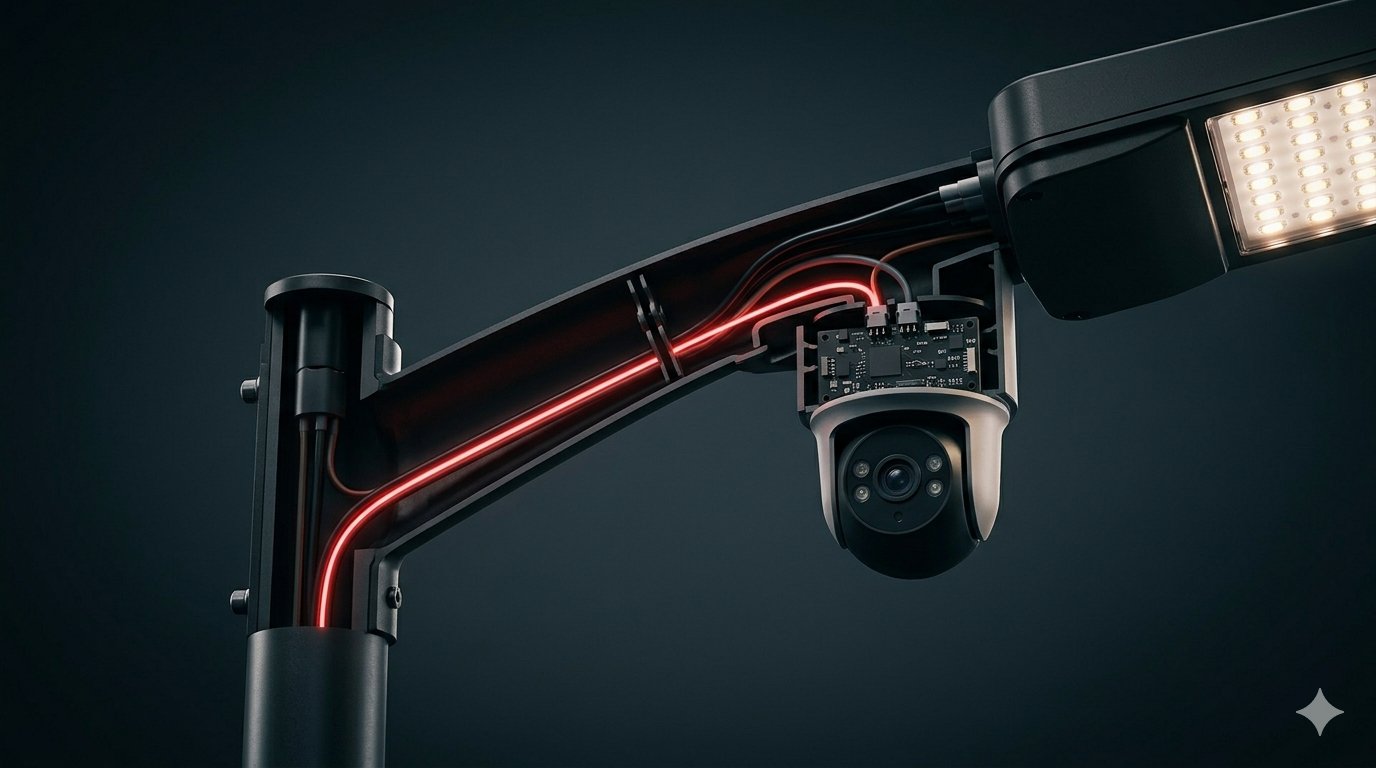
Ubicquia's response was to remove the city's credentials and cut the service layer. But the cameras still had power. And because the cameras share a physical power supply with the streetlights themselves, fully cutting the cameras would have meant turning off the lights. Hundreds of San Diego streetlights would have gone dark. The city could not accept that. [4]
The footage kept recording locally on the devices, deleting itself on a five-day cycle. On September 14, a manager in the Sustainability Department contacted Ubicquia and asked the company to reduce the footage retention window to zero. To stop recording entirely.
Aaron declined. His reply: "More than happy to help you out once we are paid for last fiscal year." [4]
The city's public information officer for the Sustainability Department confirmed to Voice of San Diego that as of early November 2020, Ubicquia had not complied with the shutdown request. The cameras were still recording. The footage was encrypted and could only be decrypted by Ubicquia. The city had officially "shut down" a surveillance network it could not actually access, could not actually stop, and was still paying $2.3 million per year to finance. [2] [4]
The moratorium held for roughly three years. During that time, San Diego passed the Transparent and Responsible Use of Surveillance Technology (TRUST) Ordinance, establishing a Privacy Advisory Board and requiring community engagement and City Council approval before any surveillance technology could be deployed. The framework looked like accountability. [9]
In late 2023, the City Council approved reinstatement of the smart streetlight program. Mayor Todd Gloria signed it into law. The city entered into a new five-year agreement with Ubicquia for 500 cameras, this time paired with Flock Safety's automated license plate recognition technology. The system was operational by January 2024. [9]
The new program came with stated safeguards: no facial recognition, no audio recording, footage overwritten after 15 days, access limited to authorized personnel. The TRUST Ordinance was cited as the governing framework. [3]
Then, in July 2024, SDPD invoked the TRUST Ordinance's "exigent circumstances" clause to install cameras in San Diego's Hillcrest neighborhood ahead of Pride festivities, bypassing the normal Privacy Advisory Board review process. Privacy advocates argued this set a precedent for surveillance deployment without standard oversight, using an emergency exception as a routine tool. [11]
By mid-2024, SDPD reported that the revived system had helped recover 210 stolen vehicles, 10 firearms, and led to 206 arrests. The city's surveillance map, publicly available online, showed the density of deployment across neighborhoods including areas with high proportions of minority residents. [14]
San Diego did not build this surveillance network in isolation. Federal money has played a documented role in the expansion of local surveillance infrastructure across California and nationally. The ACLU of San Diego identifies the Department of Homeland Security Grant Program as a key driver, providing funding to local law enforcement agencies for surveillance technology purchases with limited oversight or community control. [13]
The DHS funding mechanism matters for one specific reason: it allows local agencies to acquire surveillance capability through a federal pipeline that operates largely outside of local budget approval processes. A city council that might balk at a line item for cameras can find those cameras already paid for by a grant the police department applied for independently.
By 2025 and into 2026, a new concern surfaced at San Diego City Council. Members began questioning whether the ALPR data collected by the smart streetlight network could be accessed by federal immigration enforcement agencies. SDPD stated publicly that it does not enforce U.S. immigration law and that data sharing with federal agencies is governed by state law. [12]
The data exists regardless of stated policy. The infrastructure is in place. And the question of who can ultimately compel access to locally collected surveillance data under federal authority has not been resolved by any San Diego ordinance.

San Diego's story has a specific cast of characters, a specific vendor, a specific mayor, a specific ordinance. But the underlying pattern is not specific to San Diego.
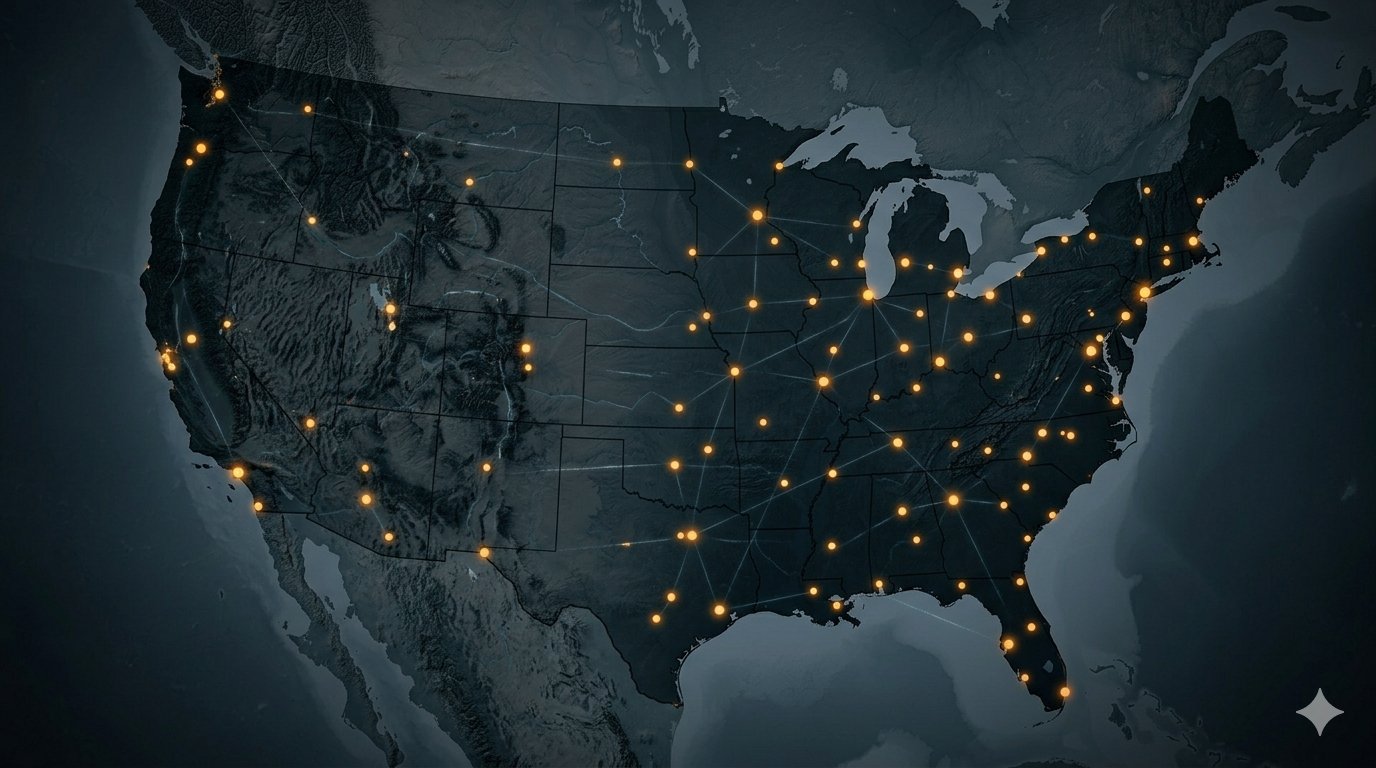
The model is: a city procures "smart" infrastructure under a sustainability or safety rationale. Surveillance capability is embedded in the hardware but not foregrounded in the public pitch. The vendor retains technical control over the platform. Law enforcement access follows, sometimes before governance frameworks exist. Public pushback leads to a nominal shutdown. The shutdown is incomplete because the city does not fully control the hardware it paid for. The program relaunches with more capability than the original.
Ubicquia and comparable vendors market smart streetlight systems to cities across the United States. The same procurement pattern, energy savings pitch followed by law enforcement integration, has appeared in multiple municipalities. The same technical dynamic, vendor control over hardware the city nominally owns, creates the same leverage imbalance. [9]
The DHS funding pipeline accelerates adoption. A city that might not fund the hardware through its own budget can receive a federal grant that does the same thing. The local debate never happens because the money arrives before the question is asked.
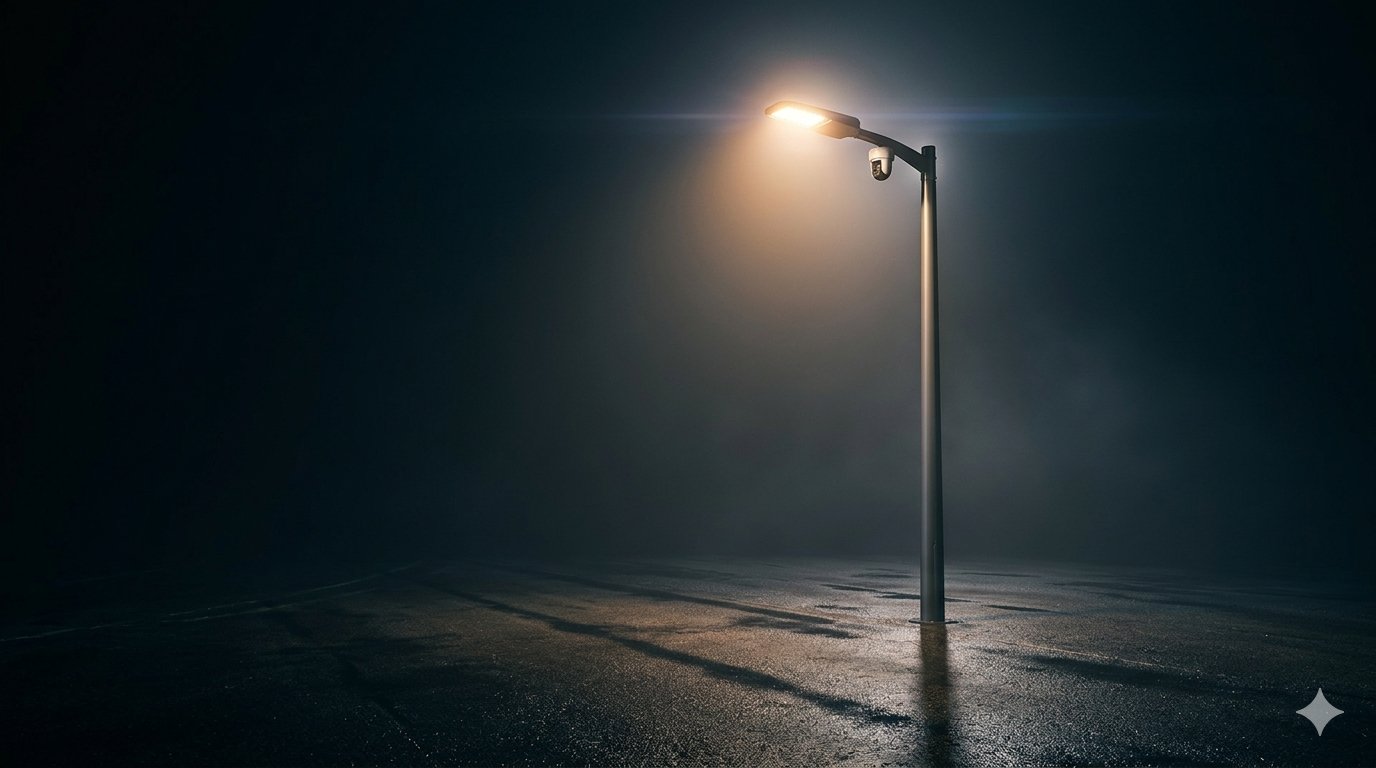
San Diego is the clearest case study because the receipts are public. The procurement records exist. The access logs were released. The vendor correspondence was reported. The City Council debates are on tape. The Grand Jury weighed in. The whole arc, from installation to secrecy to shutdown to revival, is documented.
That documentation is not the norm. Most cities that have acquired similar infrastructure have not had a Voice of San Diego asking questions, a Monica Montgomery Steppe demanding an ordinance, or a Grand Jury producing a report. The hardware goes up. The cameras run. Nobody asks.
If your city has "smart streetlights," here is what you should find out: Who owns the platform? Does the vendor retain technical control over the cameras? Can your city independently disable the cameras without also disabling the lights? What law enforcement access exists, and under what authorization? What federal funding paid for the hardware? What data-sharing agreements are in place with federal agencies?
These are not hypothetical questions. San Diego asked them after the fact. The answers were worse than anyone expected.
San Diego didn't lose control of its surveillance network. It gave it away. The city approved infrastructure it didn't fully understand, signed contracts that didn't fully protect its authority, and discovered years later that "shutting down" a system it didn't control meant asking a private company nicely and being told no.
The vendor got paid. The cameras kept recording. The program came back bigger. And the federal money that helped build it is flowing to cities across the country right now.
And your city may have already done the same thing.
The same poles. The same governance failure. A new company bolted onto the hardware. San Diego didn't just install cameras it couldn't turn off — it installed a second surveillance layer on top of them, connected to a national network of 80,000 cameras that tracked protesters, abortion patients, and Romani families. And when cities tried to leave that network, they found themselves in the same trap.
Read Investigation 05 →